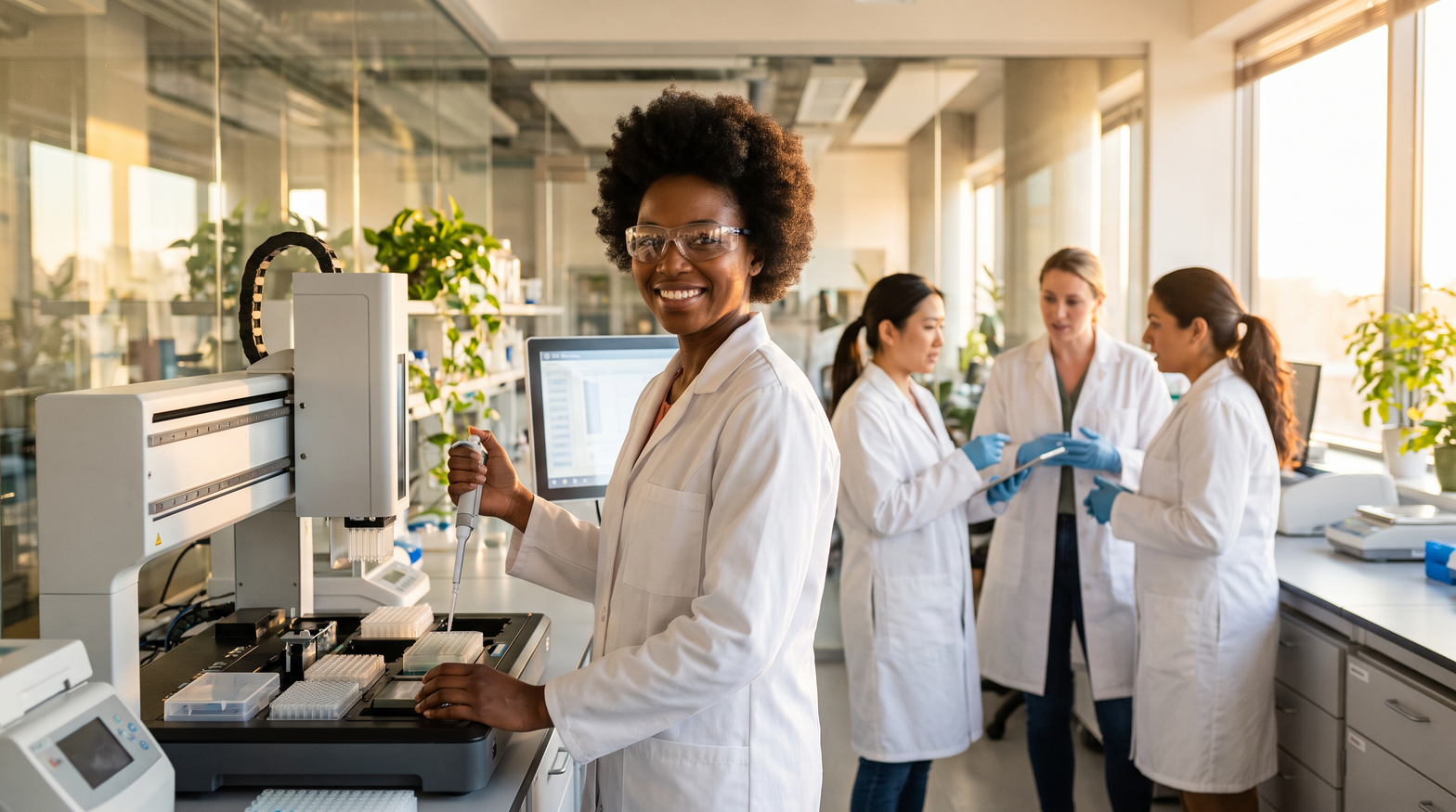
Inside the Labs of Tomorrow
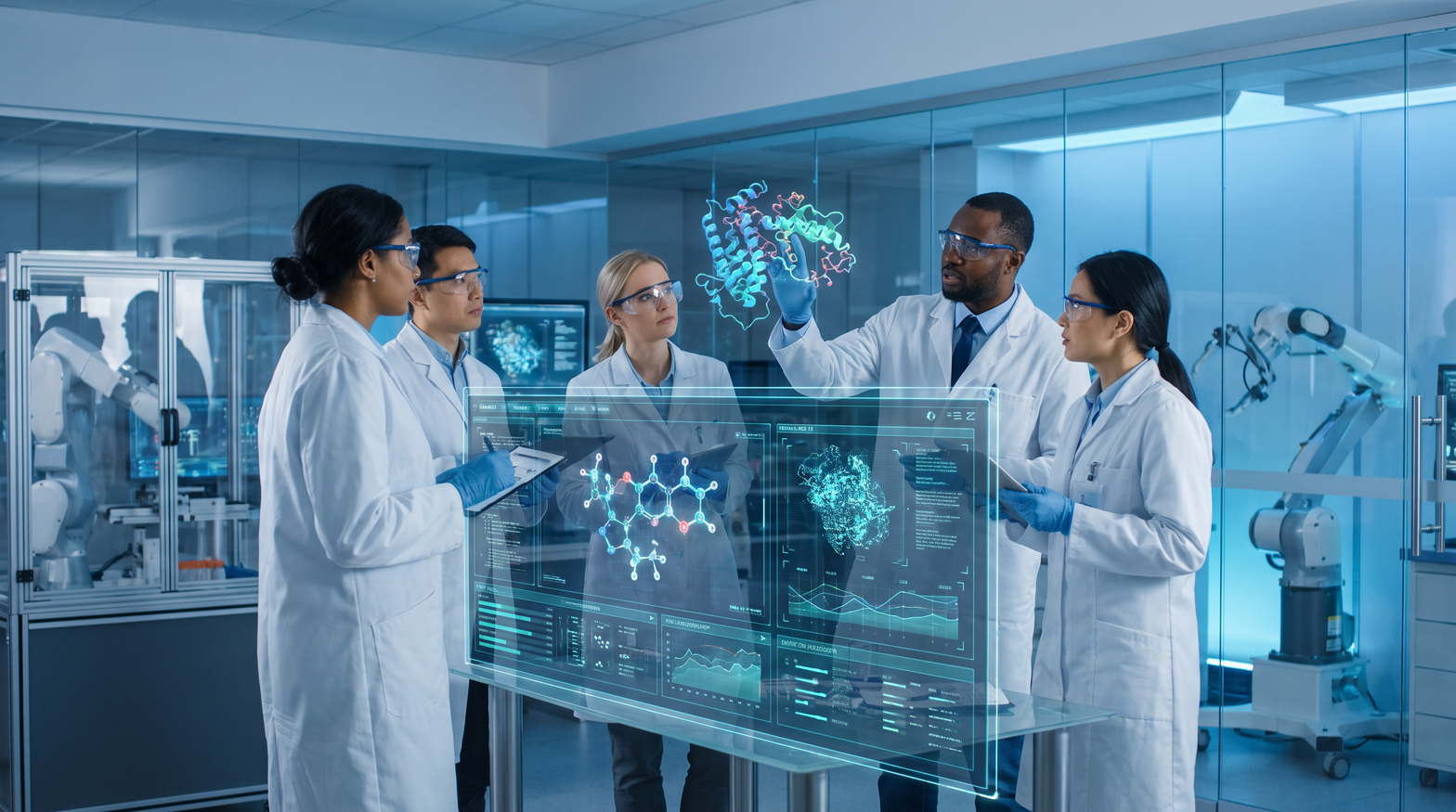
The path from a scientific idea to a life-changing medicine has always been long, uncertain, and extraordinarily complex. Traditionally, it could take more than a decade and enormous investment to move a single therapy from the laboratory bench to a patient's bedside. Today, a quiet revolution is underway inside research labs, and artificial intelligence is at its center.
Why Drug Discovery Is So Hard
To appreciate what AI changes, it helps to understand the scale of the challenge. The number of possible drug-like molecules is astronomically large, greater than the number of stars in the observable universe. Somewhere in that vast space lie the compounds that could treat cancers, rare diseases, and conditions that have resisted treatment for generations.
For decades, scientists explored this space through painstaking trial and error, synthesizing compounds, testing them, and learning slowly from each result. It was rigorous and essential work, but it was also limited by time, cost, and the sheer number of possibilities no human team could ever test exhaustively.
"AI doesn't replace the scientist. It gives the scientist a map to a territory that was once impossibly vast."
How AI Changes the Equation
Artificial intelligence excels precisely where traditional methods strain: finding patterns in enormous, complex datasets. In modern research, AI models are trained on decades of biological, chemical, and clinical data to make predictions that once required years of experimentation.
- Target identification: AI helps pinpoint the proteins and biological pathways most likely to influence a disease, focusing research where it matters most.
- Molecular design: Generative models can propose entirely new molecular structures with desired properties, dramatically expanding the range of ideas scientists can consider.
- Predicting behavior: Before a compound is ever synthesized, models can estimate how it might bind to a target, how the body might absorb it, and whether it might be toxic.
- Prioritization: Instead of testing everything, teams can focus their laboratory resources on the candidates most likely to succeed.
The result is not a shortcut around good science, but an accelerant for it. Researchers can ask more questions, test smarter hypotheses, and fail faster on the ideas that were never going to work, saving precious time for the ones that might.
Human Expertise Still Leads
It would be a mistake to imagine AI as an autonomous inventor of medicines. The most powerful results come from partnership. Experienced scientists frame the right questions, interpret ambiguous results, and apply the judgment that no model possesses.
Consider the workflow in a modern lab. An AI model might surface a shortlist of promising compounds. Chemists then evaluate whether those molecules can realistically be synthesized. Biologists test them against living systems. The data flows back into the models, making them smarter for the next round. It is a continuous loop of human insight and machine scale, each amplifying the other.
From Data to Discovery
Behind every breakthrough is an often-invisible foundation: high-quality data and the infrastructure to use it. Labs of tomorrow are as much about data engineering as they are about test tubes. Automated equipment can run thousands of experiments and feed the results directly into learning systems. Cloud computing provides the horsepower to model molecular interactions at a scale unimaginable a generation ago.
- Vast datasets are gathered, cleaned, and structured.
- Models learn patterns linking molecular structure to biological effect.
- Predictions guide which experiments to run in the physical lab.
- Real-world results refine the models, improving every future prediction.
What It Means for Patients
The ultimate measure of any research advance is its impact on human lives. By compressing timelines and improving the odds of success, AI-enabled discovery holds the promise of bringing effective treatments to patients sooner, and reaching conditions that were previously considered too rare or too complex to pursue.
Every week saved in research is a week returned to someone waiting for a treatment that could change everything.
There is also the promise of greater precision. As models grow better at understanding individual biology, the future may hold therapies tailored more closely to the specific needs of each patient, rather than one-size-fits-all approaches.
The Careers Behind the Breakthroughs
This transformation is opening remarkable new career paths. The labs of tomorrow need not only chemists and biologists, but data scientists, machine learning engineers, and hybrid thinkers fluent in both science and code. Curiosity, adaptability, and a willingness to work across disciplines are becoming as valuable as any single technical skill.
For those drawn to work at the intersection of technology and human health, few fields offer a more compelling mission. The tools are new, but the goal is timeless: to understand disease deeply enough to defeat it.
The future of medicine is being written today, one prediction, one experiment, and one breakthrough at a time.